

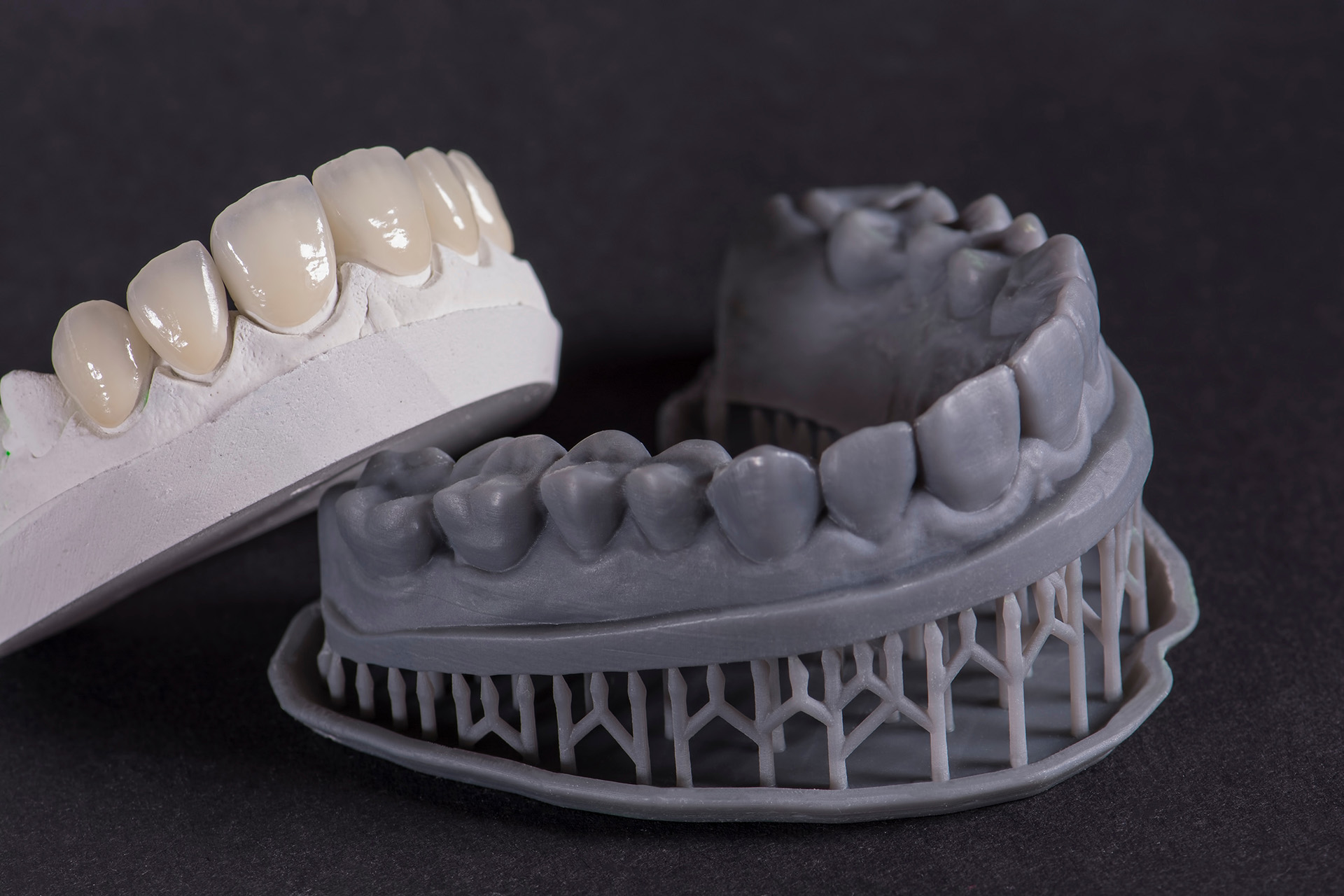
In recent years, 3D printing in dentistry has revolutionised the way dental procedures are performed. From custom crowns and bridges to complex dental prosthetics, this cutting-edge technology allows for rapid, precise, and cost-effective solutions for patients in need of restorative treatments. In this blog, we will explore how 3D printing in dentistry is changing the landscape of dental care, focusing on its impact on custom crowns, bridges, and the role of CAD/CAM technology in modern dental practices.
What is 3D Printing in Dentistry?
3D printing in dentistry refers to the use of additive manufacturing technology to create highly accurate dental restorations, including crowns, bridges, and implants. Unlike traditional methods, which require the use of moulds or impressions, 3D printing creates custom dental prosthetics directly from digital files. This technology offers numerous advantages, including faster production times, enhanced precision, and improved patient comfort.
The process begins with a digital scan of the patient’s teeth or dental cavity, often aided by CAD/CAM technology (Computer-Aided Design/Computer-Aided Manufacturing). The scan is then translated into a 3D model, which is sent to the 3D printer. The printer builds the restoration layer by layer, creating a prosthetic that fits the patient’s specifications with exceptional accuracy.
Benefits of 3D Printing in Dentistry
1. Faster Production of Custom Crowns and Bridges
One of the most significant advantages of 3D printing in dentistry is the speed at which dental restorations can be produced. Traditional methods for creating crowns and bridges can take several weeks, often requiring multiple visits to the dentist. With 3D printing, custom crowns and bridges can be created in just a matter of hours. This accelerated process reduces waiting times for patients and allows for same-day restorations.
For example, a patient in need of a crown can visit the dentist in the morning, have their teeth scanned, and receive the finished crown in the afternoon. This significantly improves patient convenience and satisfaction.
2. Enhanced Precision and Fit
Traditional methods of creating crowns and bridges involve taking physical impressions of the teeth, which can sometimes be uncomfortable for patients and may result in inaccurate moulds. 3D printing in dentistry eliminates this issue by using digital scans that capture the precise dimensions of the teeth. This ensures that the final product fits more accurately, reducing the need for adjustments and improving the overall success of the restoration.
The precision offered by 3D printing also ensures that custom crowns and bridges are designed to match the patient’s natural bite and aesthetics. The result is a prosthetic that feels comfortable and looks natural.
3. Cost-Effective Solution
While the initial investment in 3D printing in dentistry and CAD/CAM technology can be significant, the long-term cost savings are considerable. By reducing the need for manual labour and eliminating the traditional waiting time for laboratory work, dental practices can pass on these savings to their patients.
Additionally, because 3D printing creates highly accurate restorations, the need for adjustments and remakes is minimal, which further lowers costs. This makes dental treatments more accessible for many patients who may otherwise have been hesitant due to the expense of traditional methods.
4. Personalised Dental Prosthetics
Each patient’s mouth is unique, and the precision of 3D printing in dentistry allows for highly personalised dental restorations. Custom crowns and bridges can be made to fit the individual contours of the patient’s teeth and gums, ensuring a comfortable and functional result. The ability to tailor the prosthetics to each patient’s specific needs enhances both the cosmetic and functional outcomes of the treatment.
Furthermore, digital scans allow for customisation of the colour, shape, and size of the crown or bridge, ensuring that the restoration blends seamlessly with the patient’s natural teeth. This is especially beneficial for those seeking aesthetic improvements, as dental prosthetics can be crafted to achieve a natural-looking smile.
The Role of CAD/CAM Technology in 3D Printing Dentistry
CAD/CAM technology is integral to the process of 3D printing in dentistry. CAD (Computer-Aided Design) software allows dentists to design the dental restoration digitally, providing precise control over the shape, size, and appearance of the crown or bridge. CAM (Computer-Aided Manufacturing) software then translates the digital design into machine instructions, guiding the 3D printer to produce the restoration.
The combination of CAD/CAM technology and 3D printing streamlines the entire workflow, enabling faster and more accurate results. It also allows for on-site fabrication of dental restorations, eliminating the need for external laboratories and reducing the risk of errors.
How 3D Printing in Dentistry Benefits Patients
1. Comfort and Convenience
Patients who opt for 3D printing in dentistry enjoy a more comfortable experience. Traditional impression-taking can be uncomfortable, involving the use of moulds that need to be held in the mouth for several minutes. With digital scans, the process is quick and non-invasive, providing a more pleasant experience for the patient.
Additionally, the ability to produce restorations in-house means patients spend less time in the dentist’s chair and do not have to wait weeks for their prosthetics to be made.
2. Durability and Longevity of Restorations
The materials used in 3D printing in dentistry are highly durable, making them suitable for long-term use in dental restorations. Crowns and bridges created through 3D printing are typically made from materials such as zirconia or resin, which are strong, resistant to wear, and can withstand the forces of chewing and biting.
This means that custom crowns and bridges made through 3D printing are not only precise and aesthetically pleasing but also offer long-lasting durability.
3. Minimal Risk of Complications
With the high precision offered by 3D printing in dentistry, the risk of complications, such as ill-fitting crowns or bridges, is reduced. This leads to fewer follow-up visits, less discomfort for the patient, and a greater chance of a successful outcome.
3D printing in dentistry is revolutionising the field of restorative dentistry by providing faster, more precise, and cost-effective solutions for patients. From custom crowns and bridges to complex dental prosthetics, this technology allows dental professionals to deliver high-quality restorations in record time, improving both the patient experience and clinical outcomes. The integration of CAD/CAM technology with 3D printing further enhances the accuracy and personalisation of dental treatments, making this innovative technology a game-changer in modern dental care.
If you are considering a custom crown or bridge, talk to your dentist about how 3D printing can provide you with a tailored, precise, and timely solution for your dental restoration needs.